
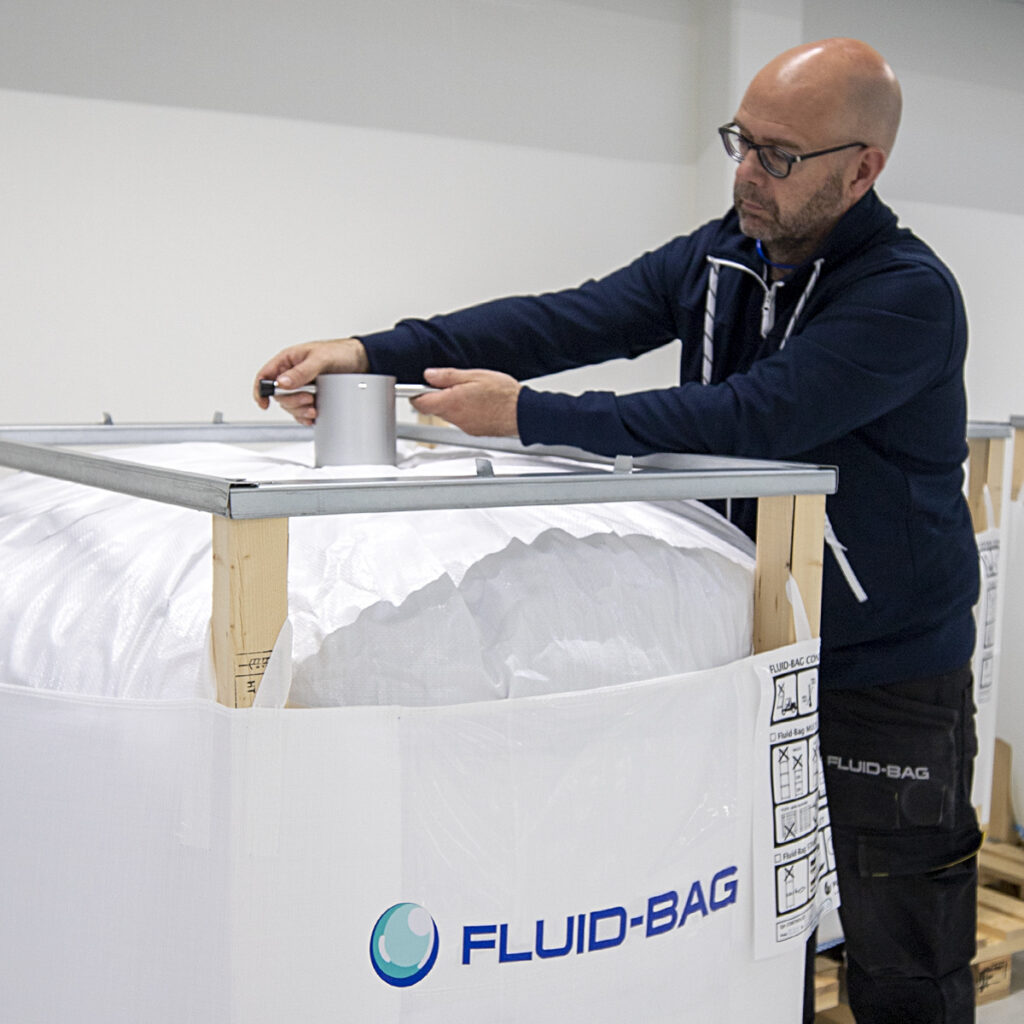
The name describes the product directly. It is a bag – flexible, collapsible, built to be squeezed – designed specifically for the materials that rigid containers handle poorly: thick pastes, high-viscosity lubricants, pharmaceutical ointments, food-grade semi-solids, adhesives, and industrial coatings.
Where the Fluid-Bag comes from
The Fluid-Bag was developed in the early 1980s by Christian Wiklund, who observed the waste and inefficiency of shipping liquid food concentrates from Brazil to Europe in steel drums.
Drums wasted product, wasted space, and wasted time. His response was to engineer a closed, flexible system that could be filled airtight, survive international transport, and be emptied to near-zero residue.
The company launched in 1984. Within its first two years, the Fluid-Bag earned recognition as the biggest innovation at the Scanpack Fair and received the WorldStar packaging award in 1986.
Today, Fluid-Bags are used in more than 65 countries across industries from lubricants and pharmaceuticals to food, cosmetics, and industrial chemistry. The bag is the core product under the Squeeze Solution brand, fully owned by Fluid-Bag Ltd.
What a Fluid-Bag consists of
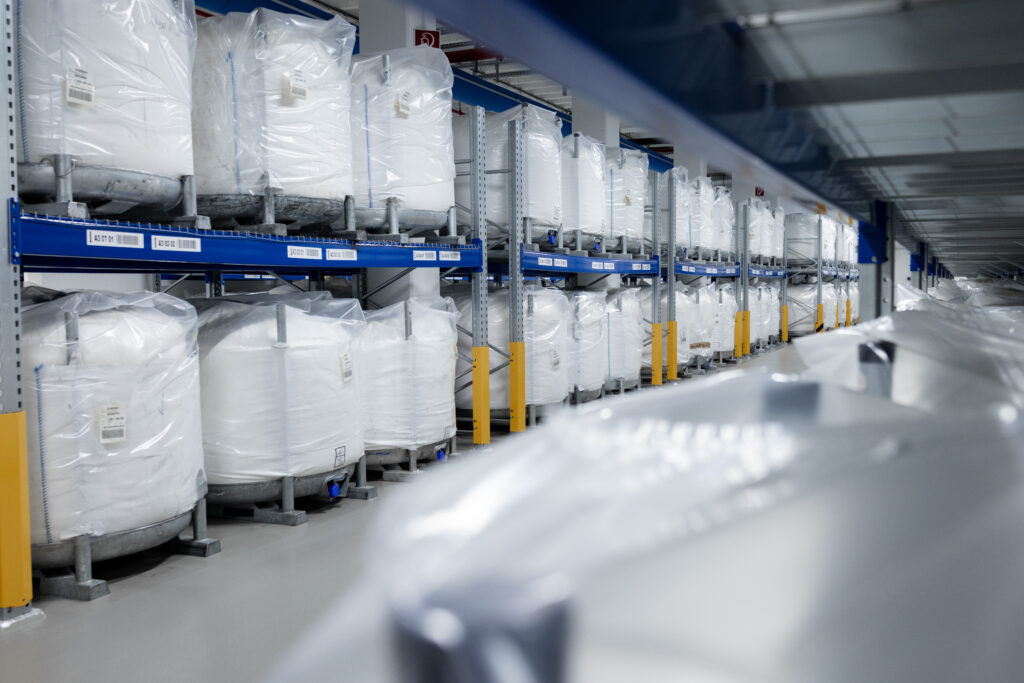
A Fluid-Bag is a configured system of matched parts, each with a specific function:
- The inner liner
The inner liner is the product-contact layer; a multi-layer barrier film engineered to match the chemistry, viscosity, and sensitivity of the material being packed. The bag collapses as product is removed, maintaining contact with the material throughout the emptying process and preventing air ingress.
Barrier compositions of the inner liner vary by application. Food-grade, pharmaceutical-grade, solvent-resistant, oxygen-barrier, and UV-protective configurations are all available, as well as aluminum barrier when low WVT rates are required.
- The outer transport bag
Woven polypropylene fabric gives the system its structural integrity. It contains four poles in either wood or steel (depending on the product FLEXI or MULTI), and a support frame.
The outer transport bag protects the inner liner during filling, handling, and transport, and is engineered to survive the physical stresses of logistics, including forklift contact and drops from normal handling height.
- The pallet
The pallet integrates the container into standard logistics infrastructure. Wooden pallets are used for one-way shipments; steel pallets support rotational systems where the outer bag and pallet are recovered, cleaned, and returned for refilling.
- The outlet valve
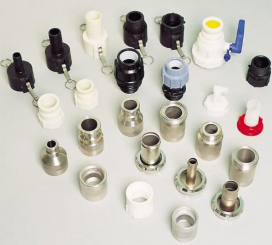
The outlet valve connects the container to a pump or dispensing system. Valve size, which can be 2″, 3″, or 4″, is selected based on the product’s viscosity, desired pump flow and other parameters. Lower-viscosity oils discharge typically through 2-inch outlets; high-viscosity greases, ointments, and pastes typically require 3-inch or larger.
The two product variants: FLEXI and MULTI
Fluid-Bags are available in two main configurations, each suited to a different logistics model.
Fluid-Bag FLEXI is a one-way container
With Fluid-Bag FLEXI, the inner liner, outer bag, and wooden pallet are used once. After emptying, all components are separated for local recycling; no return transport required.
FLEXI is the right choice for long-distance or international supply chains where return freight adds cost, and for applications where a clean, never-reused inner liner is required at every fill.
» Click here to read more about the Squeeze Solution one-way solution with Fluid-Bags.
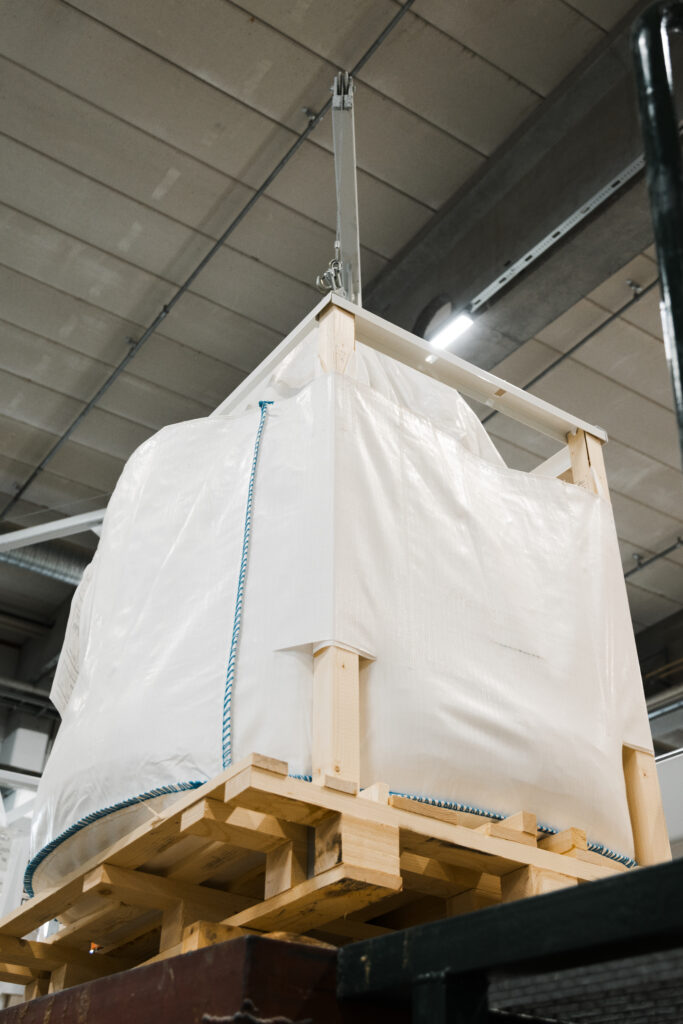
Fluid-Bag MULTI is for internal use or established routes
The Fluid-Bag MULTI combines a single-use inner liner with a reusable outer bag and steel pallet. The outer bag and pallet are returned to the filling location after emptying and refitted with a new liner.
MULTI suits established rotational supply routes and internal plant logistics where the container travels a defined, controlled circuit. It is also the configuration used in GMP-regulated pharmaceutical and cosmetic environments, where the reusable components can be tracked and validated across fill cycles.
Both variants are available in 900 liters (237 US gal), optimized for sea container shipping, and 1 000 liters (264 US gal) for truck and inland transport.
» Click here to explore our customer cases for practical examples.
How a Fluid-Bag is filled
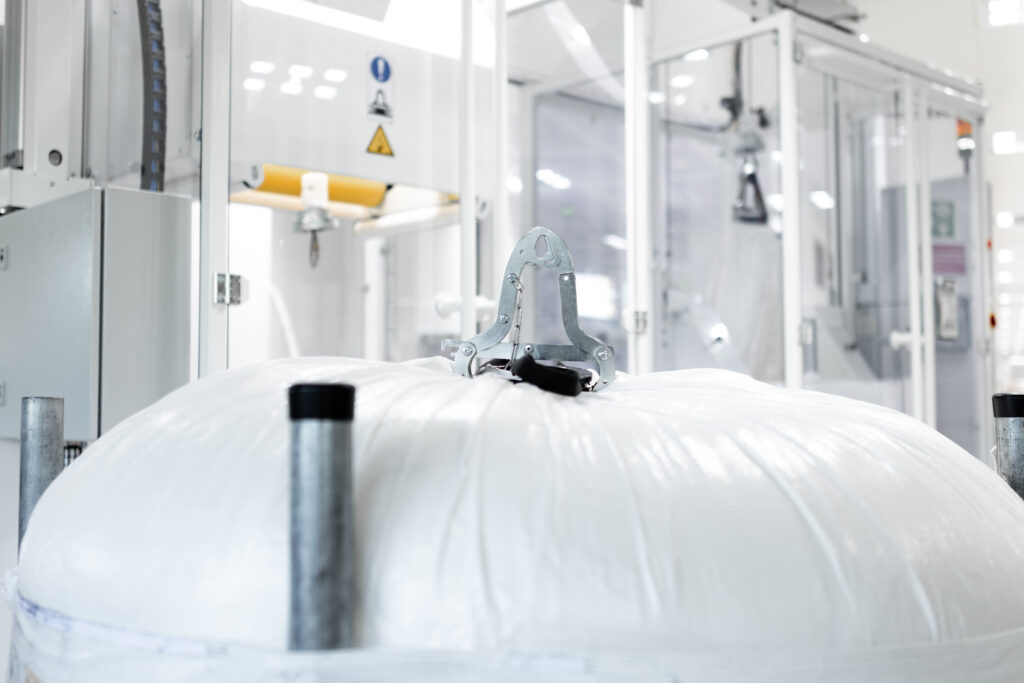
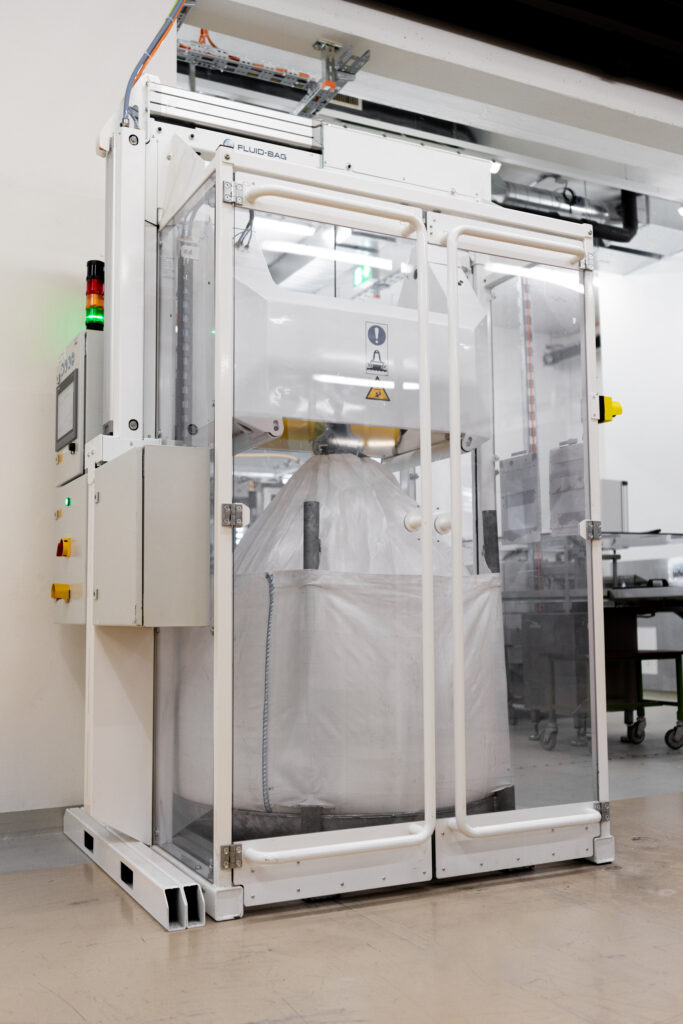
The filling process begins with a pneumatic filling station that stretches the empty Fluid-Bag to its full capacity before product enters.
Stretching the bag pre-positions both top and bottom outlet valves correctly, maximizes usable volume, and prevents air from being trapped inside as filling begins. The result is an airtight fill with no headspace air that could oxidize sensitive products or create pressure differentials during transport.
Filling stations can be mounted on weigh scales for precise, repeatable fill weights. Standard setups handle most viscosities; customized configurations are available for high-viscosity products, cleanroom environments, and high-throughput production lines.
» Click here to learn more about the filling step.
How a Fluid-Bag is emptied
The emptying process is where the Fluid-Bag’s flexibility does its most important work. As a pump draws material from the outlet valve at the base, the inner liner collapses inward around the remaining product.
This collapse maintains consistent feed pressure at the outlet throughout the discharge cycle, the opposite of what happens in a rigid container, where air fills the void left by departing product.
For viscous and semi-solid materials, mechanical discharge equipment amplifies this effect. The machines work the liner progressively from top to bottom, forcing residual material toward the outlet.
Residual waste levels as low as 0.5-1% per from Fluid-Bag have been documented in many operational settings; a figure that compares favorably to the mechanical limits of emptying viscous products from rigid containers, such as steel totes, drums or IBC tanks.
The system is fully closed from fill point to final pump stroke. No lid is removed, no air enters, and no open-transfer step is required.
What materials Fluid-Bags handle
The application range spans any pumpable liquid or semi-solid product. The common thread is not industry, it is product behavior: materials that are too viscous, too sensitive, or too valuable to handle well in rigid containers often suits the Fluid-Bags.
- Industrial lubricants and greases
Lubricant oils, hydraulic fluids, and NLGI-grade lubricating greases from NLGI 0 through 3, including specialty greases used in mining, steel manufacturing, and automotive production.
Companies including ExxonMobil, Petro-Canada Lubricants, and Moove use Fluid-Bags in their grease supply chains.
» Click here to see the steel mill case with Lohmann & Stahl.
- Pharmaceutical and medical semi-solids
Topical ointments, petrolatum-based creams, gels, and bulk pharmaceutical intermediates moving between manufacturing, quarantine, and filling lines under GMP conditions. Bayer Supply Center Grenzach has used Fluid-Bags for bulk ointment handling for decades.
» Click here to see the Bayer case video.
- Cosmetics and personal care
Cosmetic creams, gels, lotions, and emulsions where shear sensitivity and contamination control are priorities. Weleda, the certified natural cosmetics manufacturer, uses Fluid-Bags for internal bulk logistics.
» Click here to see the Weleda case video.
- Food ingredients and products
Juice concentrates, fruit products, chocolate products, cheese cream, peanut butter, tahini, and other food-grade pastes and semi-solids. The viscosity range in food applications is wide: from pourable juices to dense nut butters and chocolate that require mechanical discharge assistance.
All food-contact liners meet EU and FDA requirements; production facilities hold FSSC 22000 certification.
- Adhesives, sealants, and coatings
1K PUR adhesives, structural adhesives, polyurethane sealants, industrial coatings, foundry coatings, road marking paint, and printing inks. These materials often combine high viscosity with temperature sensitivity and limited pot life, properties that make closed-system, residue-minimizing discharge operationally important.
The H&R ChemPharm case covers high-viscosity specialty wax compounds for international shipment and the Kiilto case video shows handling of wood adhesives for CLT factories.
» Click here to see the Kiilto case video.
- Automotive and heavy industry materials
Sound-dampening compounds, body sealants, and other viscous materials delivered directly to production lines. At Toyota Manufacturing UK’s Burnaston Plant, Fluid-Bags replaced a double ram press system that required 56-minute container changeovers per unit.
» Click here to explore the Toyota case.
The Fluid-Bag is versatile
If a material can be pumped – or made pumpable through temperature adjustment or mechanical assistance – a Fluid-Bag configuration can likely handle it. The outlet size, liner specification, and discharge equipment are matched to the specific viscosity, chemistry, and temperature profile of each product.
» Click here to learn more about Fluid-Bag configurations in the Squeeze Solution system.
The three ways to use a Fluid-Bag system
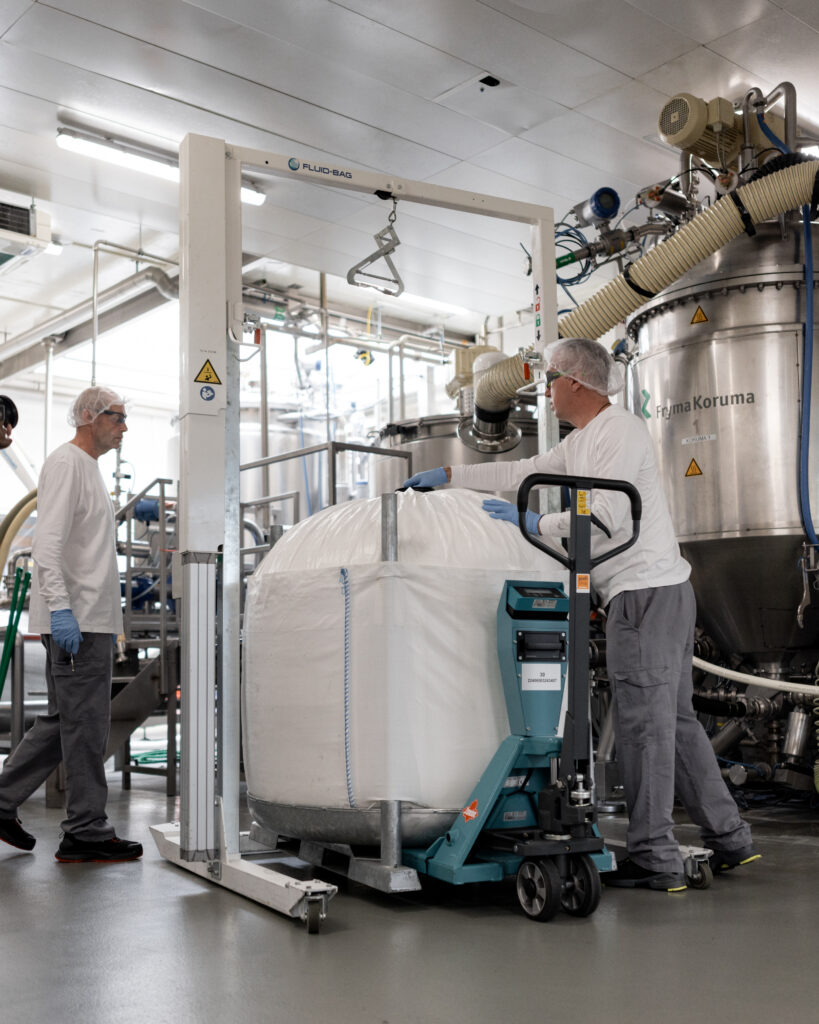
The same container technology supports three distinct operational models, depending on where the Fluid-Bag sits in the supply chain:
- One-way transport: From producer to end-user, with no return of containers. The most common model for international supply chains. » Click here to learn more one-way.
- Rotational system: Reusable outer bag and pallet circulate between filling and emptying locations on an established route. Reduces per-unit cost at higher volumes. » Click here to learn more about rotation.
- Internal logistics: Fluid-Bags used within a single facility, moving bulk material from manufacturing to filling or packaging lines. Often replaces stainless steel vessels and eliminates the cleaning cycles between production runs. » Click here to learn more about internal.
Fluid-Bag vs the alternatives
| Fluid-Bag | Steel drum (200 L) | Rigid IBC tote | |
|---|---|---|---|
| Capacity | 900-1000 L / 237-264 US gal | 200 L / 55-gallon | 1000 L / 264 US gal |
| Discharge method | Mechanical equipment for squeeze + pump (closed system) | Follower plate press or gravity + pump (open) | Gravity, tilt mechanism + pump (open) |
| Residual waste | Less than 1% documented | 3% is defined as ”empty” by EPA | Gravity-limited; varies by product viscosity |
| Air ingress during discharge | None, the liner collapses | Yes, unless follower plate fitted perfectly and drum is not dent | Yes. |
| Cleaning between uses | No, inner liner always replaced and fresh; no CIP required | Drum washed or reconditioned; on your own or paid by ticket system | Full clean-in-place cycle required; internal, or hire external service |
| Return logistics | Not required for one-way FLEXI, or by route (steel pallet, MULTI) | Drum return, reconditioning or local metal disposal needed | Container return required or pickup service to be ordered |
| Empty container weight | ~4-5 kg or ~36 kg incl. wooden pallet | ~17-22 kg | ~50-70 kg |
Certifications
Fluid-Bags are manufactured by Fluid-Bag Ltd under ISO 9001 (quality management), ISO 14001 (environmental management), and FSSC 22000 (food safety).
Inner liner materials meet EU and FDA food-contact requirements. Pharmaceutical-grade configurations are produced under conditions compatible with GMP environments. UN transport certification applies to relevant configurations for dangerous goods transport classification.
Do you want to know more?
Our team combines technical knowledge with industry insight to deliver guidance for your specific needs.
