
Feeding centralized lubrication systems – why your grease supply format matters
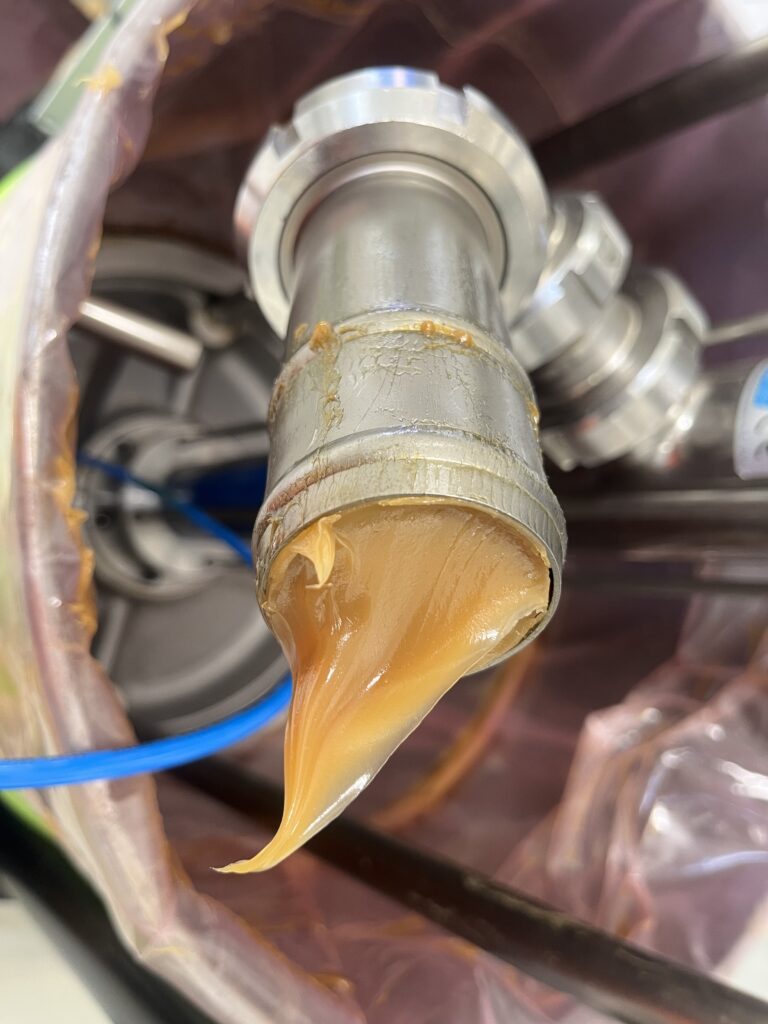
But what goes into the reservoir matters just as much as what comes out of it?
Most discussions of centralized lubrication system performance focus on injector calibration, cycle timing, and monitoring. Very few address the variable that precedes all of it: the grease supply format. The container used to fill the reservoir. The transfer process that gets product from drum to system. The moment contamination is most likely to enter – and then travel to every lubrication point downstream.
That is the conversation this article is about.
How centralized systems distribute risk
A centralized lubrication system works by drawing grease from a central reservoir – typically fed by a pump assembly – and distributing it through a network of tubing to individual injectors or progressive divider valves. Each injector delivers a fixed, metered shot to a specific bearing, pin, bushing, or other lubrication point.
The architecture is elegant precisely because it eliminates the need for manual relubrication at each point. But that architecture also means that anything introduced into the reservoir gets distributed system-wide.
A single contamination event at refill; a particle, a moisture pocket, a grease incompatible with what remains in the lines; does not stay localized.
It goes everywhere the system goes.
SKF data shows that inadequate lubrication (36%) and contamination (14%) together account for 50% of premature bearing failures. SKF’s own bearing life cycle documentation confirms these precise proportions, with the remaining 50% split between improper mounting (16%) and fatigue (34%).
In a centralized system, lubrication failure and contamination failure are not independent variables. Contaminated grease is inadequate lubrication. They compound each other, and they scale with every lubrication point the system feeds.
The contamination impact on bearing life is not marginal.
SKF’s research on contamination and bearing life found that running a bearing for just 30 minutes in contaminated lubricant was enough to consume 90% of its expected service life. The L10 life ratio between a clean bearing and a heavily contaminated one can be as large as 500 to 1.
The contamination window: reservoir refill
If you ask a reliability engineer where contamination is most likely to enter a centralized lubrication system, the honest answer is: during refill.
The system itself – the tubing, injectors, and fittings – is typically sealed. The pump inlet and reservoir lid are where the process opens up. That opening, however brief, is where the outside world gets access to the grease supply.
The specific risks depend on the supply format:
- Particle contamination from new drums.
New lubricant is not clean lubricant. Research published in Machinery Lubrication found that particle concentration in new, as-supplied drums can vary by as much as a factor of 1,000 between batches; a range that reflects handling, storage conditions, and drum quality rather than anything the grease formulator controls.
The same study tested 22 drums from six major oil companies; only 3 of the 22 could have passed a standard 16/14/12 cleanliness specification. A companion article confirms that drums used for grease are no cleaner than those used for oils. Open-lid transfer – tipping a drum or manually scooping into a reservoir – then exposes whatever is in that drum to ambient particulates during the transfer itself.
- Moisture ingress through sealed steel drums.
A peer-reviewed study from Lawrence Livermore and Los Alamos National Laboratories, published in Packaging Technology and Science (Wiley, 2023), quantified moisture ingress through commercial steel drum seals under field conditions.
A standard 210-liter (55-US-gallon) drum allows 2.5 to 3.5 mg of moisture per day at typical deployment conditions, primarily through the EPDM gasket material. The researchers noted that no established testing requirements or limits currently exist for this permeation pathway.
The drums pass regulatory inspection, but moisture still enters.
Over weeks of storage before use, that accumulates. And the consequences for grease are well-documented. Machinery Lubrication notes that less than 500 ppm of water in a lubricant is sufficient to substantially shorten the service life of rolling element bearings. Noria Corporation reports that a bearing can lose 75% of its service life from water contamination before the lubricant even appears cloudy, meaning the problem is invisible until the damage is done. A U.S.
Navy study cited by Wind Systems Magazine found that increasing water content from 50 to 500 ppm reduced L10 bearing life by a factor of three.
In a centralized system that distributes that grease across every bearing it serves, the downstream exposure multiplies across the entire lubrication network.
Why grease cleanliness is harder to verify than oil cleanliness
For oil-based centralized lubrication systems, ISO 4406 cleanliness codes provide a standard framework for specifying and verifying lubricant cleanliness; the code quantifies particle counts at 4, 6, and 14 micron (µm) thresholds, and target cleanliness levels can be set for the system.
Grease is different. ISO 4406 does not apply to grease. Grease is a semi-solid; it cannot flow through the automatic particle counters the standard specifies. The NLGI and ELGI have been working jointly to develop a grease-specific cleanliness classification using alternative methods – ASTM D1404 scratch testing and Hegman gauge measurements – but no equivalent ISO cleanliness code for grease yet exists. Machinery Lubrication has covered this gap directly.
This matters operationally. UE Systems notes that because grease cannot be easily filtered after the fact the way oil can, and because it cannot currently be tested to a standard cleanliness code in routine use, the entire burden of cleanliness control falls on manufacturing conditions, packaging quality, handling procedures, and closed-system delivery. There is no downstream correction available. What enters the system is what the system runs on.
This is the strongest technical argument for treating grease supply format as a system engineering decision rather than a procurement afterthought.
Contamination compounds: what the system does with it
A centralized lubrication system is continuous. Grease is pushed through the same injectors and lines repeatedly. Any contamination that enters the reservoir circulates. Particles that are too large for a given injector orifice can cause it to stick open – leading to overgreasing – or closed, leading to starvation.
Both failure modes defeat the purpose of the system.
Machinery Lubrication’s analysis of contamination failure modes estimates that as much as 70% of all premature machine failures can be attributed to contamination. A separate analysis attributes 80% of machinery failures to lubrication-related causes, with more than one-third of those resulting from contaminated lubricant. Research widely attributed to STLE and the National Research Council of Canada estimates that particle contamination is the root cause of 82% of wear-related mechanical failures.
In a centralized system, these statistics do not apply to individual bearing points in isolation. They apply to every point the system serves, simultaneously.
Supply format as a system variable
The container that delivers grease to a centralized system actively determines the contamination risk at every refill event.
Format selection is not neutral.
Standard 200-liter (55-gallon) drums are the most common supply format and the most variable. A follower-plate pump drawing from a drum is better than open-lid scooping, but it still exposes the system at changeover. When the drum is exhausted, the pump loses prime, and the changeover window – lid off, new drum positioned, pump lowered – is where ambient contamination enters.
In a high-dust environment such as a steel mill, a mine, or a quarry, that window matters. The frequency of that window is directly proportional to how often each container needs changing.
Our analysis of what it actually costs to run grease from drums shows that most operations dramatically underestimate the true cost of changeover frequency; in labor, in residual waste, and in the contamination risk each changeover introduces. The comparison between drums and alternatives is covered in detail in our steel drums vs flexible IBCs guide.
Large-format flexible IBCs address this differently. A 1,000-liter (264-gallon) Fluid-Bag holds five times the volume of a standard drum. Changeover frequency drops by a factor of four or more.
The sealed, collapsing-bag design means the discharge pathway is closed throughout the process; grease moves from the Fluid-Bag to pump inlet without atmospheric exposure. There is no open-lid moment, no air exchange, no ambient contamination window.
The Fluid-Bag is manufactured in an ISO 14644-1 Class 8 cleanroom. The bag collapses around the product as it discharges, eliminating air ingress entirely. Residual waste is typically less than 1% of container volume, compared with 3-5% or more for rigid drums; reducing both product loss and the frequency of drum disposal.
The steel mill case for efficient lubrication
Friedr. Lohmann GmbH, a specialty steel manufacturer based in Witten, Germany, is a documented example of this transition applied directly to a centralized lubrication system.
The company replaced 200-liter steel drums with 1,000-liter Fluid-Bags to supply their centralized system. The sealed discharge system maintained grease integrity in a dust-heavy steel production environment; an environment where airborne particulates make open-container handling especially costly.
Changeover frequency dropped by 75%. The sealed system preserved the grease quality the system required, and residual waste fell to below 1%.
For another perspective from the lubricants sector itself, Moove’s industrial grease efficiency case demonstrates how grease manufacturers use flexible IBCs to supply high-volume customers while maintaining product integrity through the full supply chain.
Cold weather adds another variable
For operations in northern climates, at high altitude, or in mining environments where temperatures drop well below freezing, grease supply format interacts with a second challenge: pumpability.
Centralized lubrication systems are pressure-dependent. The pump must move grease through the distribution network at the specified pressure. Grease that has stiffened during cold storage – or that has been sitting in an unheated drum outside – can cavitate the pump, stall the system, or deliver incomplete shots to downstream injectors. It also affects the grease’s shelf life.
This is why operations in cold environments manage NLGI grade seasonally. Softer grades are used in winter because standard NLGI 2 thickens excessively at low temperatures. Some mining operations use two or even three different grades across the year to maintain system function.
ExxonMobil’s Mobilgrease XHP 100 Mine (an NLGI Grade 0 product) is formulated for dispensability down to -50°C (-58°F), illustrating how seriously cold-climate applications take pumpability at the pump inlet.
Steel drums retain cold. They are significant thermal mass, and grease stored in an unheated building or outdoor laydown area absorbs ambient cold uniformly.
A flexible container can be moved to a conditioned area more practically before use, reducing cold-soak at the transfer point. This matters especially in remote locations where equipment and infrastructure are limited.
Remote mining logistics compound all of these challenges. According to PLS Logistics, it is not unusual for the nearest carrier to a remote mine site to be 200 miles (320 km) or more away. Equipment maintenance in mining can account for 30–50% of overall mine operating costs. In that context, every contamination-driven bearing failure, every unplanned changeover, and every pump stall has outsized operational consequences.
The Terpel mining case – documented here – shows how flexible bulk supply formats address the combined logistics and contamination challenges specific to mining operations.
The refill event is a quality control event
The practical implication for reliability engineers, maintenance managers, and lubrication technicians running centralized systems is this: refill is not an administrative act. It is a quality control event. Every time the supply pathway opens to introduce new grease, a decision is being made about what enters the system.
That decision is shaped by the container format in use, how it is stored, how it is transferred, and how often the process repeats.
A few questions worth applying to current practice:
- What is the particle cleanliness of the grease at the point of transfer; not as supplied, but after storage and handling in your facility?
- What moisture has accumulated in drums that have been stored through seasonal temperature cycling?
- How many times per month does the refill process open the system to atmospheric contamination?
- Is the changeover procedure designed to minimize exposure, or has it simply evolved over time?
For anyone not getting every usable kilogram of grease from each container, our guide on maximizing grease recovery from drums covers the practical techniques, and the limits of what drum-based systems can achieve.
What this means for centralized system operators
Centralized automatic lubrication systems are designed to eliminate lubrication-related failure. They do that job well, when fed properly. The mechanical precision of the system cannot compensate for contamination introduced upstream of the reservoir.
Because grease, unlike oil, cannot currently be tested to a standardized cleanliness code once it is in service, and cannot be filtered downstream, the supply format is the last meaningful point of contamination control. It belongs in the same engineering conversation as injector sizing, cycle timing, and line pressure.
Getting it right does not require exotic solutions. It requires applying the same analytical discipline to the supply side that is already applied to everything downstream. The grease you put in is the grease the system runs on; to every bearing, every time.
Squeeze more from every refill. Waste less on failures that started before the system even ran.
The courage to [[squeeze through]]
Innovation meets resistance. And since 1984, we’ve been helping companies challenge the status quo and find better ways to handle liquids and semi-solids.
Our solution serve manufacturers and end-users across industries and products: adhesives, sealants, coatings, inks, lubricants, cosmetics, foods, pharmaceuticals, and more.
Maximal squeeze for minimal waste. Let’s pioneer together.
