
The Complete Grease Terminology Hub
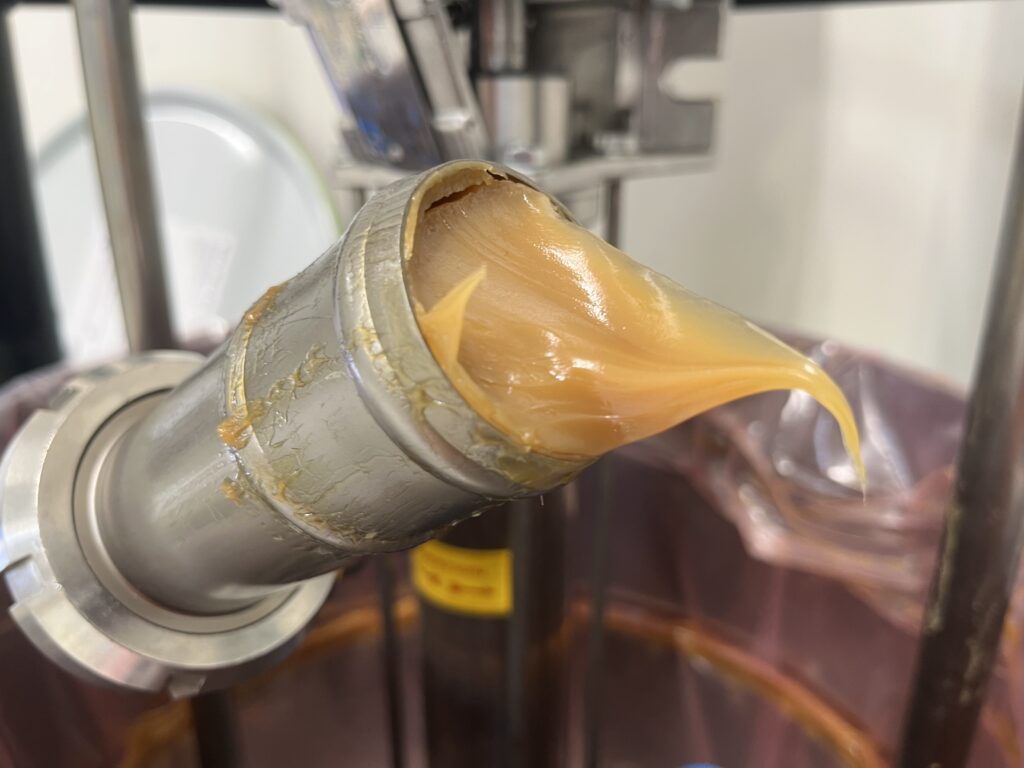
Whether you formulate grease, specify it, buy it, or simply handle it in bulk, every term you need is here. Defined precisely. Sourced properly.
Written for people who work with the real thing.
Every term, test, and concept in lubricating grease – clearly explained.
This hub covers the full vocabulary of the grease industry, from basic definitions to the test methods and standards that underpin them.
It draws on sources including the NLGI Grease Glossary, ASTM International, the Society of Tribologists and Lubrication Engineers (STLE), and OEM technical resources from SKF, Schaeffler, Timken, and NSK.
No fluff. No filler. Just the essentials – clearly, concisely, and with intent.
What is lubricating grease?
Lubricating grease is a semi-solid lubricant made from three components: a lubricating base fluid, performance additives, and a thickener.
- The base fluid – which can be mineral oil, a synthetic fluid such as PAO, or a vegetable-based oil – is typically the largest component by weight.
- The thickener is what makes grease different from oil: it gives grease its semi-solid consistency and its ability to stay in place under load. As NLGI’s FAQ puts it directly: the thickener is what sets grease apart from liquid lubricants.
- Additives are included at lower concentrations to enhance specific performance properties such as extreme pressure resistance, oxidation stability, and corrosion protection.
A useful way to think about it: Grease is a lubricant that has been thickened so it stays in contact with moving surfaces and doesn’t leak out under gravity, centrifugal force, or pressure.
Why use grease instead of oil?
Grease is preferred when a lubricant needs to stay in place – in a bearing that isn’t perfectly sealed, in a slow-moving mechanism, or in an application where relubrication is infrequent. Grease forms a seal that keeps out contaminants like dust, dirt, and water, and it can act as a carrier for solid lubricants such as graphite or molybdenum disulfide. It also allows for longer relubrication intervals, which reduces maintenance costs. SKF’s bearing selection guidance provides a practical decision framework for choosing between grease and oil in rolling element bearings.
As much as 90% of all rolling element bearings are grease-lubricated.
Where is grease used?
Everywhere machinery has rolling or sliding contacts: bearings, gears, couplings, chains, hinges, fifth wheels, slides, linkages, constant velocity joints, and pin-and-bushing assemblies. Grease appears in electric motors, machine tools, construction equipment, railroad applications, agricultural machinery, household appliances, and across automotive systems.
If you want to know more about the applications, NSK’s ABC of Bearings gives a practical overview of grease behavior in rolling elements.
A–Z Grease Glossary
A
Additive Any substance added to a lubricant to modify its properties. Common examples include anti-oxidants, corrosion inhibitors, antiwear (AW) additives, and extreme pressure (EP) additives. Additives are typically present in low concentrations but have a significant effect on grease performance. The NLGI Grease Glossary is the canonical reference for additive classification.
Adhesion The force between a lubricating grease and a metal surface that causes them to stick together. A grease with high adhesion stays attached to the surface it is lubricating, which is particularly useful in applications where the grease might otherwise be displaced by centrifugal force, vibration, or gravity. Related to tackiness (see below).
Age Hardening The increase in consistency (hardness) of lubricating grease during storage, even without mechanical working. This occurs because the thickener structure continues to develop over time. Age hardening can make grease harder to pump and dispense after long storage periods.
Anhydrous Without water. An anhydrous grease contains no detectable water, as measured by ASTM D128. Calcium 12-hydroxystearate grease is a classic example of an anhydrous calcium soap grease.
Anti-oxidant (Oxidation inhibitor) An additive that slows the chemical degradation of lubricants caused by reaction with oxygen. Oxidation changes the composition of grease, alters its properties, and shortens service life. Anti-oxidants interrupt these chain reactions, extending the working life of the grease.
Antiwear (AW) additive An additive that protects lubricated surfaces from direct contact under moderate loads by forming a protective surface layer on metal parts. For more heavily loaded applications, extreme pressure (EP) additives are required instead.
Apparent viscosity The ratio of shear stress to shear rate in a grease, as measured by ASTM D1092. Unlike true viscosity, apparent viscosity is not constant; it depends on both temperature and shear rate, because grease is a non-Newtonian material. A graph of apparent viscosity versus shear rate is used to predict pressure drop in grease distribution systems.
API Base Oil Groups The lubricating fluid in a grease can be mineral oil, synthetic fluid, or vegetable-based oil. The American Petroleum Institute classifies mineral and synthetic base oils into five groups (I through V), based on sulfur content, saturation level, and viscosity index. Machinery Lubrication’s guide to base oil groups explains each group clearly. PAO (polyalphaolefin) fluids are Group IV; all other synthetics (esters, silicones, etc.) fall under Group V.
Asperity A microscopic peak or bump on a solid surface, present on virtually all machined surfaces such as bearing races and gear teeth. Under boundary lubrication conditions, asperities on opposing surfaces come into contact. EP and AW additives function by forming protective films at these contact points.
B
Biodegradable lubricant A lubricant that decomposes to water, carbon dioxide, and minerals through the action of naturally occurring microorganisms. Readily biodegradable lubricants achieve ≥60% decomposition by mass under OECD 301 testing conditions. Biodegradable lubricants are increasingly required in environmentally sensitive applications, particularly marine environments.
Bleeding (Oil separation) The separation of liquid lubricating oil from a grease during storage or use. Some degree of bleeding is normal and even desirable in grease-lubricated bearings, as the released oil provides additional lubrication at the contact surface. Excessive bleeding, however, can indicate a formulation problem or improper storage.
Bulk appearance The visual appearance of grease when the undisturbed surface is viewed in an opaque container. Bulk appearance is typically described as: smooth (relatively free of irregularities), rough (many small irregularities), grainy (visible thickener or additive particles), cracked (surface cracks), or bleeding (free oil on the surface).
C
Cavitation The formation of voids or bubbles in lubricating grease due to reduced pressure in a dispensing system. Cavitation can prevent grease from flowing through dispensing equipment, particularly in centralized lubrication systems. It is related to feedability (see below).
Channeling The tendency of grease in a bearing to form a channel when worked, leaving shoulders of unworked grease on either side. This unworked grease acts as a reservoir and seal. Channeling is generally desirable in grease-lubricated bearings and is also used to describe the behavior of grease that resists flow under gravity at low temperatures; analogous to the pour point concept in liquid lubricants.
Coefficient of friction (COF) The ratio of the tangential force needed to initiate or maintain sliding to the perpendicular force holding surfaces in contact. The static COF describes the force needed to begin motion; the dynamic (kinetic) COF describes the force needed to maintain it. Lubricants reduce friction by separating contacting surfaces.
Compatibility (grease) Two lubricating greases are incompatible when their mixture produces physical or performance properties inferior to those of either individual grease. Incompatibility typically arises from differences in thickener type, base fluid chemistry, or additive systems. ASTM D6185 covers compatibility testing for binary grease mixtures.
Complex soap A soap thickener where the crystals or fibers are formed by co-crystallization of two or more compounds; a primary soap and one or more complexing agents such as metal salts of organic acids or inorganic salts. The complexing agent usually increases the dropping point and can improve high-temperature performance. Lithium complex, calcium complex, and aluminum complex are the most common types.
Cone penetrometer The instrument described in ASTM D217 and ISO 2137 that measures the consistency (hardness) of lubricating grease. A cone of standard dimensions and mass is allowed to drop into a sample of grease under defined conditions of temperature and time. The depth of penetration, measured in tenths of a millimeter (dmm), determines the NLGI consistency number of the grease.
Consistency (hardness) The resistance of a lubricating grease to deformation under applied force; the grease equivalent of viscosity in a fluid. Consistency is measured by the cone penetration test (ASTM D217 and ISO 2137) and classified using the NLGI grading scale. Nye Lubricants’ explainer on grease consistency gives a useful visual overview.
Corrosion The gradual destruction or pitting of a metal surface due to chemical reactions, most commonly oxidation. In lubrication, corrosion prevention is a key function of both the base fluid and specific corrosion-inhibiting additives. Test methods include ASTM D1743 and D5969 for ferrous metals, and D4048 for copper.
Corrosion inhibitor An additive used in grease to prevent metal corrosion. Different corrosion inhibitors protect different metals; a product that protects steel may not protect copper or aluminium. Always check the Safety Data Sheet and product specification for metals compatibility.
D
Dispensability The ease with which grease can be transferred from its container to its point of application through a dispensing system. Dispensability combines two related properties: pumpability (the ability to flow under pressure through lines and nozzles) and feedability (the ability to flow under suction into a pump). Problems with dispensability are common when high-consistency greases are used in centralized lubrication systems.
Dropping point The temperature at which a small amount of grease, when heated, releases a drop of material that separates from the thickener structure. Measured by ASTM D2265 (or ISO 2176), the dropping point is not the melting point of the grease and does not directly determine maximum operating temperature. Wikipedia’s dropping point article provides a clear introductory overview.
Dry film lubricant Solid lubricants that form films reducing friction without oil. Examples include graphite, molybdenum disulfide (MoS₂), boron nitride, and PTFE (polytetrafluoroethylene). These are used in high-temperature environments, vacuum conditions, or applications where liquid lubricants would be displaced or degraded.
Dynamic viscosity The ratio of applied shear stress to shear rate in a liquid, measured in centipoise (cP) or milliPascal-seconds (mPa·s). Dynamic viscosity relates to the internal resistance of a fluid to flow. In grease, the apparent viscosity is used rather than dynamic viscosity, because grease is non-Newtonian.
E
Environmentally Acceptable Lubricant (EAL) A lubricant meeting regulatory requirements on toxicity, bioaccumulation, biodegradability, and, in some cases, renewable content. The US Environmental Protection Agency defines EAL requirements in its Vessel General Permit (VGP) technical guidance for lubricants discharged into navigable US waters. Common EAL certification schemes include EU Ecolabel, Blue Angel, Nordic Swan, and OSPAR. Lubrication Engineers’ guide to environmentally acceptable lubricants explains what the classification means in practice.
Elastohydrodynamic lubrication (EHL) A lubrication regime that occurs in rolling element bearings and gears under very high concentrated loads. The surfaces deform elastically under load, increasing the contact area, while lubricant viscosity increases dramatically under the high pressure, allowing the lubricant to form a thin film that separates the surfaces. Tribonet’s guide to EHL covers the theory and practical applications. An accessible review of EHL for practitioners was published in Lubrication Science by Spikes (2015).
Extreme pressure (EP) additive An additive that enhances the load-carrying capacity of a grease under boundary lubrication conditions. EP additives react chemically with metal surfaces under high load and temperature, forming a sacrificial film that prevents metal-to-metal welding and seizure. Common EP agents include sulfurized compounds, phosphates, and chlorinated compounds, though the latter are now largely phased out. Machinery Lubrication’s article on EP additive limitations is essential reading; EP additives are not universally beneficial and can cause problems in certain applications, particularly with yellow metals and at very low speeds.
Extreme pressure property (EP) The ability of a lubricant to resist scuffing, scoring, and seizure when highly loaded moving surfaces are in contact. Standard laboratory measurements include the Timken OK Load (ASTM D2509), the Four-Ball Weld Load and Load Wear Index (ASTM D2596), and the EP by SRV Step Load (ASTM D5706).
F
False brinelling Localized wear damage in a bearing caused by small amplitude oscillatory motion – vibration rather than rotation – while the bearing is stationary and under load. The result looks like Brinell indentation marks on the bearing race, but the mechanism is fretting wear combined with surface fatigue and oxidation. False brinelling is a significant problem in wind turbine pitch and yaw bearings, and in equipment during transport. Wikipedia’s false brinelling article is a well-sourced starting point; a recent peer-reviewed study in Tribology Letters examines grease selection as a mitigation strategy.
Fatigue (rolling contact fatigue / RCF) The initiation and growth of subsurface cracks in bearing material due to repeated cyclic loading. RCF manifests as pitting, spalling, or micropitting on bearing raceways. Proper lubrication – with a grease whose viscosity provides adequate film thickness – is one of the most effective ways to extend bearing fatigue life. SKF estimates that inadequate lubrication accounts for over 36% of premature bearing failures.
Feedability The ability of lubricating grease to flow under suction into a dispensing pump at a rate equal to or greater than the pump’s delivery capacity. Poor feedability can cause cavitation at the pump inlet, leading to starved lubrication. Feedability is often improved by using follower plates in grease containers or by choosing flexible bulk packaging with discharge equipment that roll, press, twist or squeeze the product.
Fiber The microscopic thread-like structures formed by soap thickeners during grease production. Some soaps crystallise into fibers that are 20 or more times as long as they are wide. Most soap fibers are invisible to the naked eye, making the grease appear smooth. Fibrous greases – typically sodium soap – show visible stringiness when pulled.
Film strength The ability of a lubricant film to resist rupture under conditions of load, speed, and temperature. When film strength is exceeded, direct metal-to-metal contact occurs, leading to wear. EP and AW additives extend film strength under conditions where the base fluid alone would fail.
Follower plate A plate fitted to the top surface of grease in a container – drum or pail – to assist delivery of grease to the inlet of a dispensing pump. Without a follower plate, grease can bridge or channel around the pump suction, leaving large amounts unreachable.
Food grade lubricant (H1/H2/H3) Lubricants formulated and certified for use in food and beverage processing, pharmaceutical manufacturing, and personal care product production. NSF International manages the H1/H2/H3/3H/HX1 designation system:
- H1 lubricants are for incidental food contact – they must be colorless, odorless, tasteless, and non-toxic, with the concentration of any H1 lubricant in food limited to 10 ppm.
- H2 lubricants may be used in food processing areas but only where food contact cannot occur.
- H3 (edible oils) are used to prevent rust on food-contact metal surfaces.
- 3H lubricants may be in direct contact with food.
Wikipedia’s food-grade lubricant article is a useful secondary reference. An emerging development: NSF now offers the 537 PFAS-free registration for H1 lubricants that contain no per- and polyfluoroalkyl substances. ISO 21469 is the international equivalent certification for food-grade lubricants. For a plain-language explanation of NSF category codes, JAX’s guide covers the full system clearly.
Fretting wear Wear caused by small amplitude oscillations or vibrations between two surfaces in contact. The mechanism removes fine particles from rubbing surfaces, which then oxidize to form abrasive debris – often appearing as a reddish-brown powder on ferrous surfaces. Fretting wear is distinct from false brinelling, though the two frequently occur together. STLE’s TLT archive contains a clear comparison of the two failure modes.
G
Gel An elastic, jelly-like colloidal material that resembles a solid but flows like a liquid. Lubricating grease is technically a gel; a colloidal dispersion of thickener particles or fibers in base oil. The thickener network gives grease its gel-like structure.
Grease worker A standard laboratory device described in ASTM D217 used to apply a defined amount of shear to a grease before measuring its consistency. The full-scale grease worker cup holds approximately 450 grams of grease and is worked by pushing a drilled plate through the sample for a defined number of strokes.
H
Hybrid thickener A grease thickener system that combines a metallic soap with a non-soap thickener. Examples include urea-calcium complex combinations and calcium sulfonate complex thickeners that incorporate a fatty acid soap component. Hybrid systems can combine the performance advantages of both thickener types.
Hydrodynamic lubrication A lubrication regime in which a continuous fluid film completely separates two sliding surfaces. This requires sufficient relative motion, lubricant viscosity, and load to generate hydrodynamic pressure in the film. When these conditions are met, wear is essentially zero. Grease-lubricated bearings operate in hydrodynamic, elastohydrodynamic, or mixed lubrication regimes depending on speed, load, and temperature.
Hydrophilic Having an affinity for water; capable of dissolving in or absorbing water. Hydrophilic thickeners (such as some sodium soaps) can absorb water from the environment, which softens the grease.
Hydrophobic Repelling water; incapable of dissolving in water. Calcium soap greases and calcium sulfonate complex greases are naturally hydrophobic, which gives them excellent water resistance.
I
Incompatibility Two greases are incompatible when their mixture produces physical or performance properties inferior to those of the individual products. Incompatibility is not always visually obvious immediately – it may manifest as softening, hardening, or oil separation after days or weeks. ASTM D6185 is the standard test method for evaluating grease compatibility. Never mix greases without first confirming compatibility from the supplier or through testing.
Incidental food contact In the H1 classification context, this refers to unintended contact between small amounts of lubricant and food, beverages, or personal care products during processing. H1 lubricants are certified for incidental food contact, with a maximum concentration of 10 parts per million (ppm) in the final product.
K
Kinematic viscosity The resistance of a liquid to flow under gravity, measured in centistokes (cSt) and defined as dynamic viscosity divided by fluid density. Kinematic viscosity of a lubricant’s base fluid is typically measured at 40°C and 100°C per ASTM D445 / ISO 3104. Anton Paar’s wiki on ASTM D445 gives a clear technical explanation of the measurement method.
L
Lubricating grease A lubricant that is a solid-to-semi-fluid dispersion of a thickening agent in a lubricating liquid. May be formulated with additives to impart special performance properties. Defined by NLGI and distinguished from other semi-solid substances (cooking fat, petroleum jelly, hair preparations) that are sometimes colloquially called grease.
Lubrication regimes The five major regimes under which lubrication can occur:
- Boundary lubrication – film too thin to fully separate surfaces; asperities contact; depends on additive films
- Mixed lubrication – partial fluid film; some surface contact
- Elastohydrodynamic (EHL) – full film in rolling contacts under high pressure
- Hydrodynamic – full fluid film in sliding contacts
- Hydrostatic – full film maintained by externally supplied pressure
Most grease-lubricated bearings operate between boundary and EHL regimes depending on operating conditions.
M
Metallic soaps The most common thickeners in lubricating greases, formed by reacting fatty acids with metal hydroxides in a process called saponification. Common metallic soaps include lithium stearate, lithium 12-hydroxystearate, calcium stearate, and sodium stearate. The metal type determines many grease properties including dropping point, water resistance, and compatibility with other greases.
Mixed lubrication A lubrication regime where the applied load is supported partly by a fluid film and partly by direct surface contact. Mixed lubrication is common during start-up, reversals, and low-speed operation. AW and EP additives are critical for protecting surfaces in this regime.
N
Newtonian behavior Fluids in which the applied shear stress is directly proportional to the shear rate, meaning viscosity is constant regardless of shear rate. Simple liquids like water and most mineral oils approximate Newtonian behavior. Lubricating greases are non-Newtonian.
NLGI Certification Marks NLGI licenses certification marks that indicate a grease meets defined performance requirements:
- GC-LB – the traditional automotive grease certification, defined in ASTM D4950. GC is for wheel bearing grease; LB is for chassis/universal joint grease. GC-LB means a product meets both. SAE published a technical paper on the history of the GC-LB and HPM programs in SAE 2023-01-1652.
- HPM (High Performance Multiuse) – introduced by NLGI in 2020, covering a broader range of automotive applications with additional marks for water resistance (WR), corrosion resistance (CR), load carrying ability (HL), and low temperature performance (LT). Lubrizol’s NLGI HPM summary explains what each mark requires.
NLGI Grade (Consistency Number) A numerical scale from 000 to 6 that classifies the consistency of lubricating grease based on worked penetration at 25°C, measured by cone penetration (ASTM D217). The lower the number, the softer the grease. Wikipedia’s NLGI consistency number article includes the full penetration range table.
| NLGI Grade | Worked Penetration (dmm) | Approximate consistency |
|---|---|---|
| 000 | 445–475 | Fluid |
| 00 | 400–430 | Semi-fluid |
| 0 | 355–385 | Very soft |
| 1 | 310–340 | Soft |
| 2 | 265–295 | Normal (most common) |
| 3 | 220–250 | Firm |
| 4 | 175–205 | Hard |
| 5 | 130–160 | Very hard |
| 6 | 85–115 | Block-like |
NLGI 2 is the most widely used grade in industrial and automotive applications. Semi-fluid grades (0 and 00) are used in enclosed gearboxes; NLGI 000 semi-fluid greases are used in some sealed hub units where pumpability is critical.
Non-Newtonian behavior Fluids and semi-solids – including lubricating greases – in which viscosity is not constant but depends on the shear stress and shear rate applied. Greases thin under shear (thixotropy) and recover when shear stops. This behavior is central to how grease functions in a bearing: it flows when worked and recovers its structure when at rest. Conventional viscometers with uncontrolled shear rates are not suitable for measuring the viscosity of non-Newtonian materials.
Non-soap thickener Any thickener that is not a metallic soap. Common non-soap thickeners include:
- Polyurea – ashless, oxidatively stable; common in electric motor and high-temperature applications. Machinery Lubrication’s guide to polyurea grease covers selection and compatibility.
- Organophilic clay (bentonite/hectorite) – no defined melting point; used in high-temperature applications
- Fumed silica – specialty applications; no defined melting point
- PTFE (fluoropolymer) – premium niche; excellent chemical resistance
O
Operating temperature The range between the minimum temperature at which a grease-lubricated device can start acceptably, and the maximum temperature at which the grease provides adequate lubrication. This depends on the base fluid, thickener type, and additives – not on the dropping point alone. High-temperature bearing life tests (ASTM D3336, ASTM D3527, DIN 51281 FE9) are more predictive of maximum operating temperature than the dropping point test.
Oxidation stability The resistance of a grease to chemical reactions with oxygen during service or storage. Oxidation causes darkening, thickening, increased acidity, and loss of lubrication performance. Measured by ASTM D942 and D5483. Anti-oxidant additives and certain thickener types (polyurea) contribute to improved oxidation stability.
P
PAO (Polyalphaolefin) A synthetic lubricant base oil in API Group IV, synthesised by the polymerisation of linear alpha-olefins. PAOs are valued for their chemical purity, consistent molecular weight distribution, high viscosity index, and wide operating temperature range. PAO-based greases are common in high-performance, wide-temperature, and long-service-life applications.
Penetration The depth, in tenths of a millimetre (dmm), to which a standard cone penetrates a grease sample under defined conditions of cone weight, temperature, and time. The lower the penetration number, the harder (higher consistency) the grease.
Plasticity The property of an apparently solid material that allows it to be permanently deformed without rupturing, under applied force. Grease behaves plastically; it deforms when force is applied above the yield stress, but it does not flow freely below that threshold.
Pumpability The ability of a grease to flow under pressure through the lines, nozzles, and fittings of a dispensing system. Pumpability is best indicated by apparent viscosity at moderate shear rate, measured per ASTM D1092. Lower NLGI grades and higher-temperature conditions improve pumpability. Centralized lubrication system design must account for grease pumpability across the expected temperature range.
R
Rheology The study of the deformation and flow of matter; stress, strain, temperature, and time. For lubricating greases, rheology describes the complex behavior between solid-like structure at rest and liquid-like flow under shear. Grease rheology is critical for predicting dispensability, startup torque, film formation, and thickener structure survival over time. Open-access research on grease rheology is available through MDPI’s Lubricants journal.
Roll stability The ability of a grease to maintain its consistency when subjected to shear in a rolling steel cylinder, measured by ASTM D1831. Roll stability indicates how much a grease will soften during mechanical working in service – relevant for applications with high shear, such as centralized lubrication systems and flexible bulk packaging discharge.
Reversibility The ability of a grease to return to its normal consistency after temporary excursion above its dropping point. Aluminum complex greases are known for this property. Most other grease types do not recover consistency after overheating.
S
Saponification The chemical reaction of a fatty acid, fat, or ester with an alkali metal base to form a metallic salt – commonly called a soap. Saponification is the fundamental reaction used to produce most lubricating grease thickeners. The reaction produces soap crystals or fibers that form the thickener network of the grease, plus water as a byproduct. Wikipedia’s saponification article explains the underlying chemistry clearly.
Seizure A severe bearing failure mode where rolling surfaces overheat rapidly, causing metal surfaces to soften, melt, and weld together. Causes include inadequate lubrication, excessive loads, contaminated grease, or insufficient internal clearance. Seizure is often the end result of untreated fretting, false brinelling, or oil starvation.
Shear stability The ability of a grease to resist changes in consistency during mechanical working. Also called mechanical stability. Measured in the grease worker after prolonged working strokes (10,000 or 100,000 double strokes per ASTM D217). A grease with poor shear stability softens excessively during service and may migrate out of the lubrication zone.
Simple soap A grease thickener prepared by reacting a single organic acid with one or more inorganic bases. Lithium 12-hydroxystearate (formed from 12-hydroxystearic acid and lithium hydroxide) is the world’s most widely used simple soap thickener. Contrast with complex soap, which uses two or more acids.
Soap thickener The collective term for metallic soap-based thickeners: salt crystals or fibers, partially soluble in the base oil, that form the colloidal structure giving grease its semi-solid consistency. The soap thickener network holds the base oil in place and releases it gradually to the lubricated contact.
Squeeze film lubrication A lubrication state where surfaces coated or flooded with lubricant move toward each other at sufficient speed to develop fluid pressure that briefly supports a load. The lubricant’s viscosity (or apparent viscosity) prevents it from immediately flowing away from the contact zone. Squeeze film lubrication occurs between gear teeth, wrist pins, and bushings – particularly during impulsive loading.
Syneresis Loss of base oil from grease due to shrinkage or rearrangement of the thickener structure. Syneresis is a form of oil separation caused by physical or chemical changes in the thickener – distinct from controlled bleeding. Excessive syneresis during storage or service indicates a formulation or storage problem.
T
Tackiness The adhesive-cohesive property of a grease – how well it adheres to the surface it lubricates and how well it stretches into threads rather than breaking cleanly. Tackiness is assessed qualitatively by pulling a small amount of grease between thumb and forefinger. Tacky greases resist being thrown off by centrifugal force and are often preferred in open gear and chain lubrication. Lubes’N’Greases has covered tackifier technology for those who want to go deeper.
Texture The visual and tactile properties observed when handling grease. Common texture descriptors include: buttery (separates in short peaks with no visible fibers), long fibers (stretches into strings), stringy (long fine threads), resilient (withstands compression without deformation), brittle (ruptures or crumbles when compressed), and tacky (adhesive to metal surfaces). Texture is often a clue to thickener type.
Thickener The solid particles – fibers, platelets, amorphous particles, or polymers – that are dispersed in base oil to form the structure of lubricating grease. The thickener determines consistency, dropping point, shear stability, water resistance, and high-temperature performance. The main thickener families are: simple metallic soaps, complex metallic soaps, polyurea, organophilic clay, fumed silica, and fluoropolymer.
Thixotropy The decrease in grease consistency (softening) that occurs when grease is sheared, followed by a gradual increase in consistency (hardening) when shearing stops. Lubricating grease is both thixotropic and non-Newtonian. Thixotropy is why a grease can be pumped through a dispensing line but then recovers its structure once it reaches the bearing. The recovery process in thixotropic greases is time-dependent and may take minutes to hours.
V
Viscosity A measure of a fluid’s internal resistance to flow. For base oils and lubricating fluids, viscosity is typically described in terms of kinematic viscosity (cSt), measured per ASTM D445. For grease, apparent viscosity is used instead, because grease is non-Newtonian. In everyday terms: thicker (more viscous) base oils provide better film separation at low speeds and high loads; thinner (less viscous) base oils flow more readily at low temperatures and in high-speed applications.
Viscosity index (VI) A measure of how much a lubricating fluid’s viscosity changes with temperature. A higher VI means viscosity is more stable across a temperature range. Measured per ASTM D2270 from kinematic viscosity values at 40°C and 100°C. PAO (Group IV) and Group III mineral oils have high viscosity indices; Group I and II oils have lower VIs.
W
Water resistance The ability of a lubricating grease to withstand the effects of water without losing performance. NLGI and ASTM define four distinct components of water resistance:
- Water washout resistance – measured by ASTM D1264, the resistance to being washed out of a bearing by flowing water
- Water absorption – whether the grease absorbs water (water absorbent), partially absorbs it (water soluble), or repels it (water resistant)
- Water corrosion resistance – the ability to protect metal in the presence of water, tested by ASTM D1743 and D5969
- Water spray resistance – resistance to displacement by water spray impact, measured by ASTM D4049
An in-depth technical discussion is available in NLGI’s Spokesman paper on water resistance. Calcium sulfonate complex greases are particularly noted for water resistance – Lubrizol covers the transition to calcium sulfonate for those formulating for wet environments.
Waterproof lubricating grease A grease formulated to repel water, form a seal against water ingress, and protect metal against rust and corrosion in wet environments. Calcium soap greases and calcium sulfonate complex greases are inherently hydrophobic and are widely used in marine, agricultural, and outdoor applications.
Wear The cumulative, gradual removal of material from surfaces in contact. NLGI and ASTM recognize several wear modes relevant to lubricated systems:
- Abrasive wear – cutting or abrasion by hard particles
- Adhesive wear – surface asperities weld and tear apart; ranges from mild (frosting) to severe (galling, seizure)
- Corrosive wear – chemical or electrochemical attack removes material
- Fretting wear – oscillatory micro-motion between surfaces in contact
- Rolling contact fatigue – subsurface crack growth from cyclic loading
- Electrical discharge wear – material removal from electrical sparks or arcing (increasingly relevant in electric vehicles)
White etch cracking A bearing failure mode characterized by white-etching cracks on the bearing surface, most common in high-stress applications such as wind turbine gearbox bearings. The cracks appear as white areas under scanning electron microscopy due to a phase transformation in the steel. Contributing factors include stray electrical currents and in-situ hydrogen generation. This is an active area of research in wind energy tribology.
Working The subjection of lubricating grease to any form of agitation or shearing action beyond simple transfer. Working is used in the laboratory (grease worker) to bring grease to a standard condition before penetration measurement. In service, working occurs every time grease is sheared in a bearing or dispensing system.
Y
Yield stress (Yield point) The minimum shear stress required to produce flow in a grease; the threshold below which grease behaves as a solid and above which it flows. Yield stress is estimated from a shear stress vs. shear rate curve. It is a key parameter in predicting grease behavior in dispensing systems and centralized lubrication at low temperatures.
Yield (grease manufacturing) The amount of grease of a given consistency that can be produced from a specific quantity of thickener. As yield increases, the percentage of thickener required decreases. Higher-yield thickeners can reduce raw material costs while maintaining target consistency.
Key test methods reference
Grease performance is defined and measured by standardized test methods. The most important in practice:
| Property | ASTM method | ISO equivalent |
|---|---|---|
| Cone penetration / consistency | D217 | ISO 2137 |
| Dropping point (wide range) | D2265 | ISO 2176 |
| Kinematic viscosity (base oil) | D445 | ISO 3104 |
| Apparent viscosity | D1092 | — |
| Four-ball wear | D2266 | ISO 11008 |
| Four-ball EP (weld/LWI) | D2596 | ISO 11009 |
| Water washout | D1264 | ISO 11009 |
| Water spray resistance | D4049 | — |
| Roll stability | D1831 | — |
| Grease compatibility | D6185 | — |
| Oxidation stability | D942 | IP 142 |
| High-temp bearing life | D3336 | — |
ASTM International publishes free abstracts for each test method. Full text requires purchase or institutional access.
Storage and handling
Grease doesn’t last forever. Storage conditions have a direct impact on shelf life and performance.
Recommended storage practice, per NLGI FAQ guidance:
- Store indoors, out of direct sunlight, in an upright position
- Keep containers covered to prevent accumulation of moisture, dust, and debris on lids
- Never store drums on their side – horizontal storage accelerates oil separation
- Keep away from heat sources
- Follow the manufacturer’s stated shelf life – most manufacturers place the date of manufacture on labels
If you want to know more about the importance of shelf life, we recommend this article: Grease shelf life – what the conflicting guidelines actually mean
Oil separation during storage is natural and not automatically cause for concern. Warm environments and long storage times accelerate it. Contact your grease supplier if significant separation occurs – some products can be remixed; others cannot.
Opened containers should be smoothed flat after each use (to minimize surface area), tapped gently on a hard surface to remove entrained air, resealed, and stored out of direct light and heat.
Disposal of unused or used grease must follow applicable federal, state or local regulations. In the US, EPA guidance on managing used oil and 40 CFR Part 279 govern disposal. Some recycling facilities accept unused grease alongside used oil.
Grease compatibility: the mixing rule
The rule is simple: don’t mix different greases unless compatibility has been confirmed.
Different thickeners, base fluids, and additive packages can interact in ways that soften, harden, or chemically destabilize the mixture. The widely referenced compatibility chart – reproduced and explained at Machinery Lubrication – is a starting point only. Actual compatibility depends on the specific products involved, concentration, temperature, and time. ASTM D6185 is the test method for determining compatibility.
When changing grease type in a bearing, purge the old product with the new until at least 90% of the old grease has been displaced – then monitor the bearing for signs of incompatibility: unusual softening, higher-than-normal running temperature, or oil exudation.
Condition-based maintenance (CBM) and in-service grease analysis
CBM stands for Condition Based Maintenance. Applied to lubricating grease, it means monitoring in-service grease to detect degradation or contamination before failure occurs, rather than relubricating on a fixed schedule.
Key in-service tests for grease samples include:
- Visual appearance – spread a thin layer on a white ceramic tile; look for metallic particles, free water, or unusual colour changes
- FTIR analysis – Fourier Transform Infrared spectroscopy detects contamination, oxidation, and base oil loss
- Metals analysis – ICP or X-ray fluorescence quantifies wear metals and additive depletion
- Crackle test – a quick screen for water contamination
AZoM’s grease analysis overview, Precision Lubrication’s onsite grease analysis guide, and Spectro Scientific’s grease analysis guide cover both field and laboratory approaches. ASTM D7718 and D7918 standardize in-service grease sampling and testing procedures.
New and emerging technologies
Wind turbine greases are among the most technically demanding applications in the industry. Pitch and yaw bearings operate under oscillatory motion, wide temperature swings, high loads, and infrequent rotation – conditions that promote false brinelling and fretting. Research into specialised greases for these conditions is ongoing. MDPI Lubricants and ScienceDirect both publish open or accessible research in this area. Schaeffler’s technical documentation covers rotor bearing arrangements specifically.
Energy-efficient lubricants for electric motors are formulated to reduce friction losses. In a manufacturing facility with hundreds of motors, even small reductions in energy consumption per motor compound into meaningful cost and emissions savings.
Electric vehicle (EV) greases must handle new demands: higher speeds, electrical conductivity or insulation requirements, and different thermal profiles. MDPI Lubricants has published peer-reviewed comparisons of grease performance in EV bearing applications.
Biodegradable and EAL greases continue to develop in response to environmental legislation – particularly in marine, agricultural, and forestry applications where lubricant discharge into the environment cannot be fully controlled. STLE’s Tribology & Lubrication Technology covers the working definitions and test methods. The 2026 STLE Emerging Trends report outlines where the industry is heading.
Grease and bulk handling, transport and logistics
Grease is not just a chemistry problem. It’s a handling problem.
The physical properties that make grease an excellent lubricant – consistency, thixotropy, non-Newtonian flow, tackiness – also make it demanding to handle in bulk.
- Dispensing equipment must be matched to the grease’s apparent viscosity and pumpability.
- Storage containers – such as Fluid-Bags or steel drums – must protect against oil separation, contamination, and age hardening.
- Discharge systems must be engineered to recover maximum product from every container.
Follower plates, squeeze and press mechanisms, and closed-system discharge are the engineering responses to these challenges – keeping grease protected from the moment it leaves the manufacturer to the moment it enters the application.
Primary references
This hub draws primarily on:
- NLGI Grease Glossary – the canonical industry reference
- NLGI FAQs – authoritative answers on practical grease questions
- STLE LubeCafe Library – Society of Tribologists and Lubrication Engineers
- ASTM International – test method standards
- SKF, Schaeffler, Timken, NSK – OEM bearing and lubrication resources
- MDPI Lubricants – open-access peer-reviewed research
- Machinery Lubrication / Noria — practitioner-focused trade publication
- Lubes’N’Greases – industry trade press
- NSF International – food-grade lubricant certification
- US EPA – environmental and disposal regulations
This hub is maintained by Squeeze Solution – the solution for handling liquids, semi-solids and other viscous materials. For information on flexible bulk grease packaging and discharge systems, visit Our start page, The solution or our Customer cases.
The courage to [[squeeze through]]
Innovation meets resistance. And since 1984, we’ve been helping companies challenge the status quo and find better ways to handle liquids and semi-solids.
Our solution serve manufacturers and end-users across industries and products: adhesives, sealants, coatings, inks, lubricants, cosmetics, foods, pharmaceuticals, and more.
Maximal squeeze for minimal waste. Let’s pioneer together.
